

Disclosure Day Doesn't Really Land. But Spielberg's Ideas Still Do
Spielberg's Disclosure Day hints at a return to form for our great maestro of cinema, even if the landing doesn't exactly stick.


Wonder isn’t just a theme or an aesthetic choice in a Spielberg film – it’s an inherent sense of believing that we are meant to move beyond the constraints of our imaginative minds. Our ability to proactively charge forward as a positive collective on this planet. If nothing else, this is what Steven Spielberg has gifted cinema with for the last 56 years in Hollywood.
It’s 2008, I’m 17 years old, working at Cold Stone Creamery, fiercely scrubbing burnt waffle cone batter off the counters as I near the end of my closing shift so I can make it in time to the midnight release of Indiana Jones and the Kingdom of the Crystal Skull. I owned and obsessed over the first three films for the entirety of my childhood, along with Star Wars, of course. I couldn’t be more excited. But while Star Wars was a cinematic space opera that took me to new worlds, Indiana Jones seemed real. A man in our real history fighting real Nazis, exploring real, unearthed treasures, whether hyper-mythologized or not. Stories suffused with morality, no matter how violent, and adventure, no matter how unreal the possibility of surviving a leap out of an airplane with only a life raft, landing on a snowcapped mountain, plummeting through rock and forest, and inevitably shuttling onto a river in New Delhi without a scratch could ever be. I walked out of Kingdom of the Crystal Skull feeling…none of those things. "I don't understand. Am I missing something? Was I just tired?" It was the first time I felt disappointed by my favorite director. And I was confused.
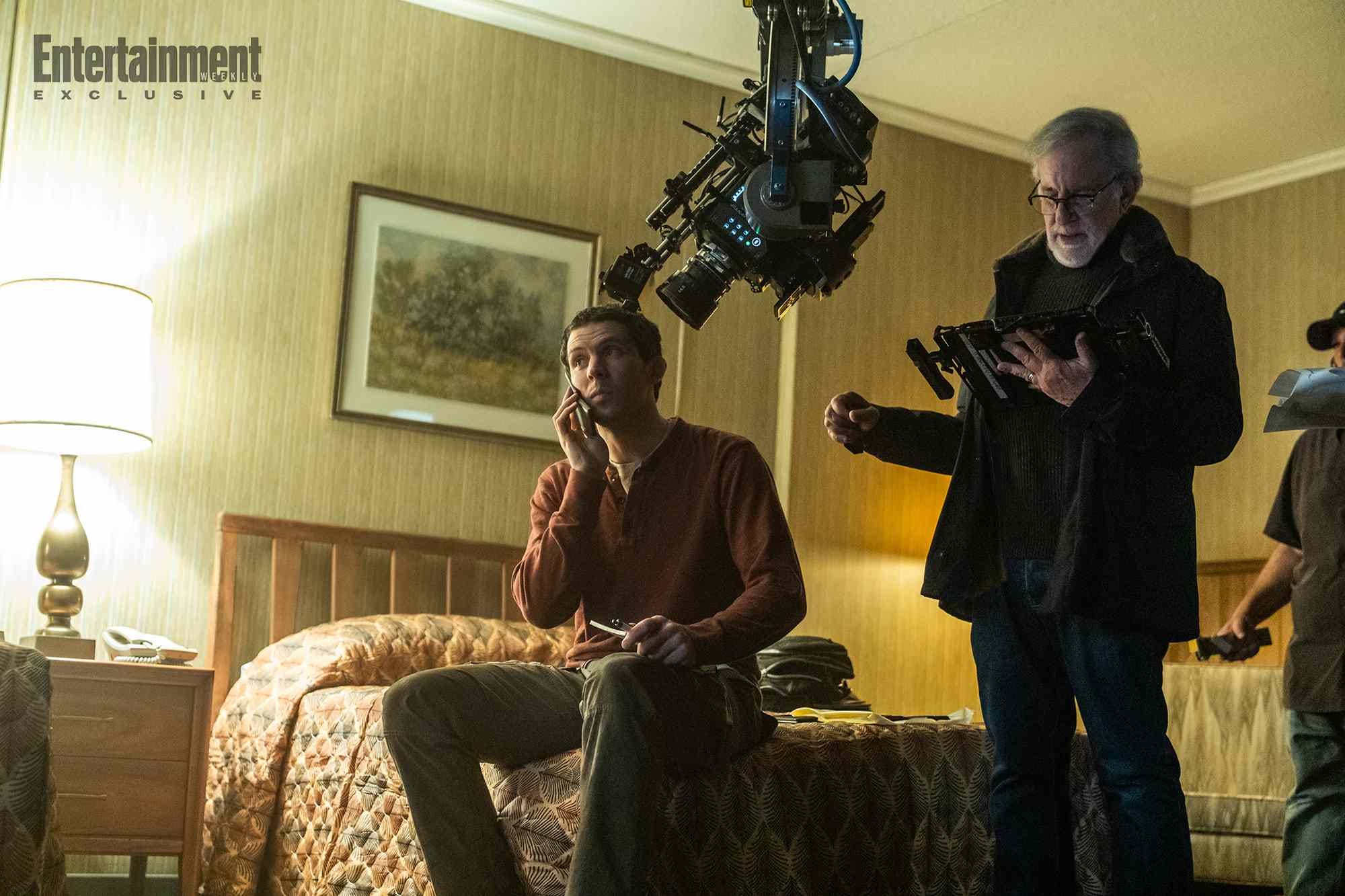
Disclosure Day is what we like to call a “return to form” for an artist – at least, that’s what most critics are saying about this release. In this instance, we tend to connect Steven Spielberg with all things alien and science fiction. And while he’s undoubtedly, triumphantly famous for the likes of Close Encounters of the Third Kind and E.T. the Extra-Terrestrial for aliens, and Minority Report, Jurassic Park, and A.I. Artificial Intelligence for true sci-fi, Spielberg is much, much more than a genre filmmaker. I don’t need to spend the duration of this article combing through his library of historical dramas and espionage thrillers to showcase how his acute eye for camera work can make a scene between two people having a drinking contest in Nepal, one that would generally be composed of four separate shots, envisioned and perfectly executed as a single, unbroken moving master. Because beyond his expert level composition, the elasticity of Spielberg’s canvas feels boundless. There is a compelling need to translate his personal conflicts on family, heartbreak, loss, and historical grief into a digestible, entertaining narrative.
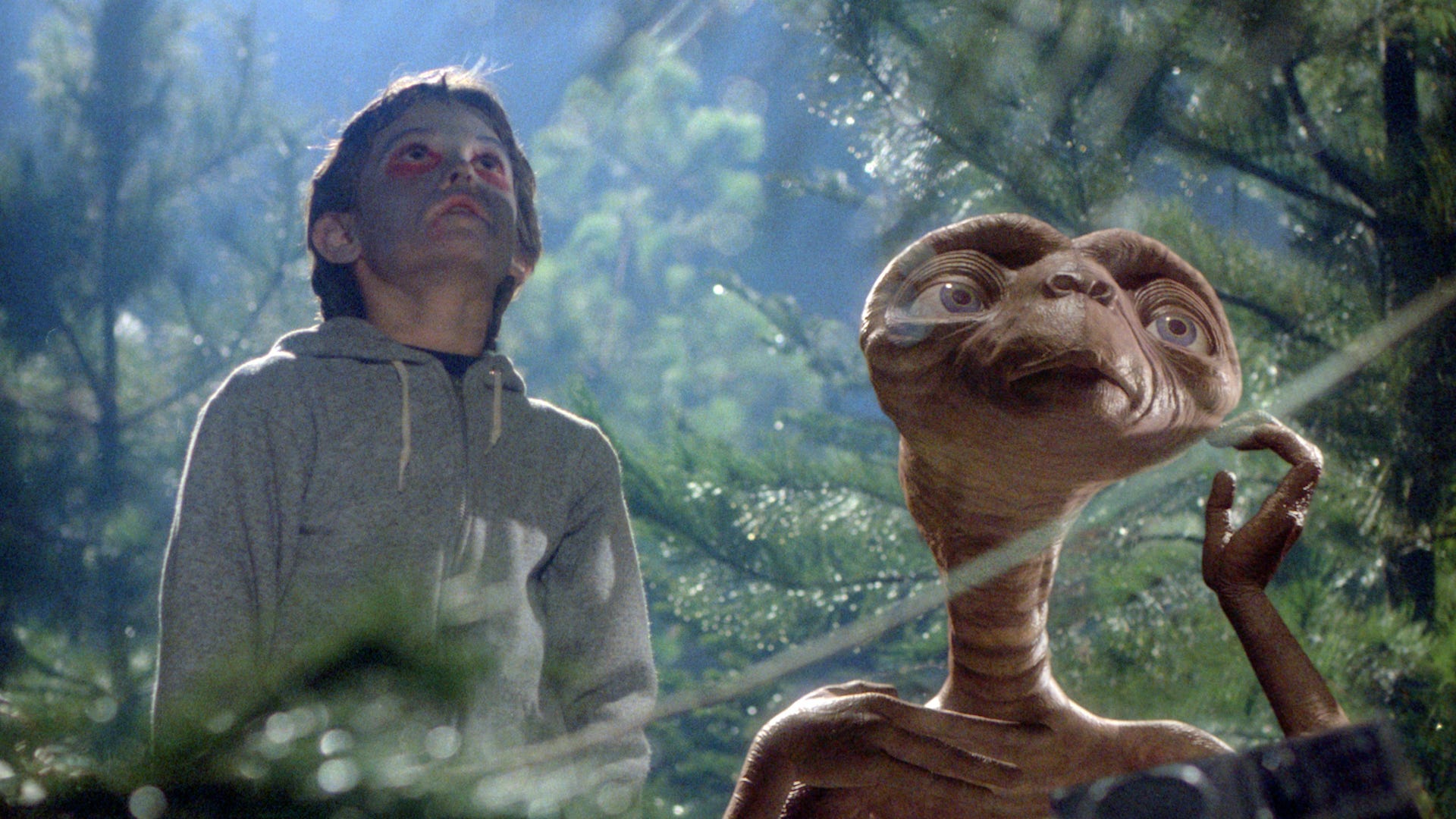
Against the grain of most alien genre’d films of the seventies and eighties, E.T. uses the characters of a broken family as a stand-in for political subtext. Beneath the sunny surface of Reagan’s campaign, selling a return to optimism and innocence of the American dream after the anxieties of the Cold War, the stability of the nuclear family household was in fact dying, creating a surge in divorce rates. This was Spielberg working through something personal as a product of divorce himself, using Elliot’s friendship with an unknown being to fill such a void, and essentially making the alien a surrogate for connection in a household defined by absence. Combine that with the plot of a government threat against Elliot and E.T., the film culminates in a contest between friendship and love on one side, and state-sponsored surveillance and coercion on the other, explicitly embracing the former.
Previous to E.T., Close Encounters presented us with the idea that aliens were not among us to do harm, but rather as an example of otherness that advocates friendliness over aggression. And what makes that film’s politics so interesting and distinct from ‘70s cinema, largely preoccupied with themes of paranoia, is its ambivalence: The government is covering something up, but the thing they’re trying to cover up turns out to be something beautiful, not sinister.
If Disclosure Day feels at all familiar to the sentiments of the above subject matter, that’s because it’s almost a one-to-one of Spielberg’s original synopsis for Close Encounters when he first conceived it:
“Centered around the shady government dealings, directly following Watergate, a military officer working on Project Blue Book, the Air Force's official UFO study, becomes a whistleblower on a government cover-up of aliens.”
Knowing this, I think we can unequivocally claim Disclosure Day to be a spiritual sibling of Close Encounters. But unlike the adoration we hold for the latter, audiences seem to have mixed feelings about the former.
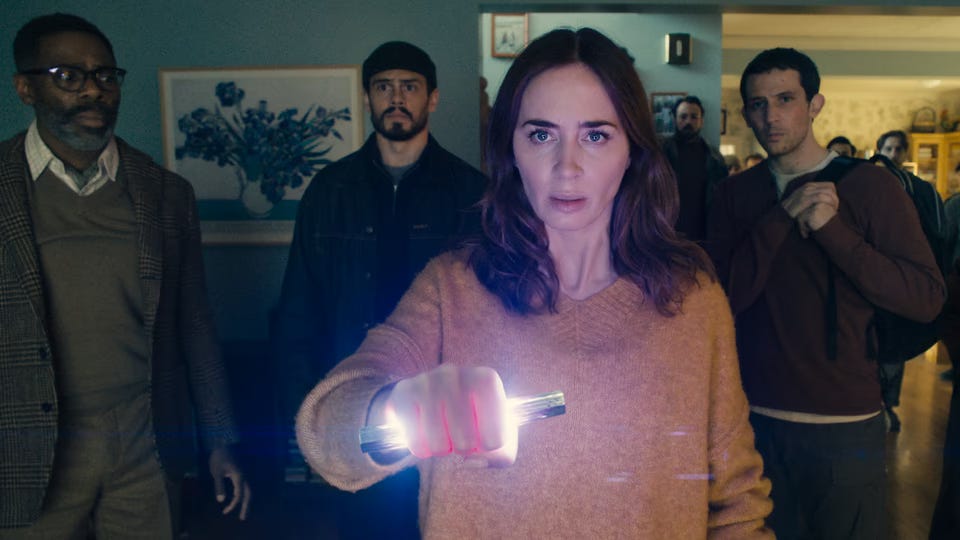
The film operates primarily as an on-the-run, cat-and-mouse conspiracy thriller: our protagonist has something the antagonist wants, and the antagonist will spend the duration of the film in pursuit. That is fun. That is adventure. That is Spielberg – check! Throw in some sci-fi? check check! John Williams expertly scoring at the ripe old age of 94? Checkers, baby. But somehow, with all of that, there is a dullness here. Relentless exposition that’s queuing up for a mysterious reveal and mildly thrilling action set pieces that had me deep in the back of my chair rather than on the edge of it (the train bit is great, but…it’s not much). This “return to form” didn’t feel as messianic as the hype for Spielberg’s science fiction return had foretold. And…I think that’s okay. Because Spielberg’s form has never left.
Like it’s spiritual sibling, I believe Disclosure Day boils down to three central themes – communication, empathy, and understanding. Somehow or another, Spielberg’s films have always contained some element of these. It’s what drives him to tell the truth in his work. There are characters in this film, who often, can’t adequately articulate what they’re trying to say to one another. Whether that be literally or figuratively. And yet, the entirety of the finale is centered around language from an alien species trying to communicate something that is intended to help us resolve humanity’s conflicts as a collective through empathetic understanding. Alien life functions, perhaps, as the very ultimate expression of a desire to break through barriers of communication. Which is why I think Spielberg is so drawn to the genre. And despite the fact that a major backdrop of this film is the threat of World War III, I don’t believe the purpose of the film was to put a finger on the pulse of fear and conflict, but of awe, wonder, and even more importantly, it’s empathy. Disclosure Day explores near universal experiences through human connection. Yet, it’s the literal magic and sense of otherness that the idea and knowledge of alien life brings to the story, and is what allows those experiences to be distilled into something so simple.
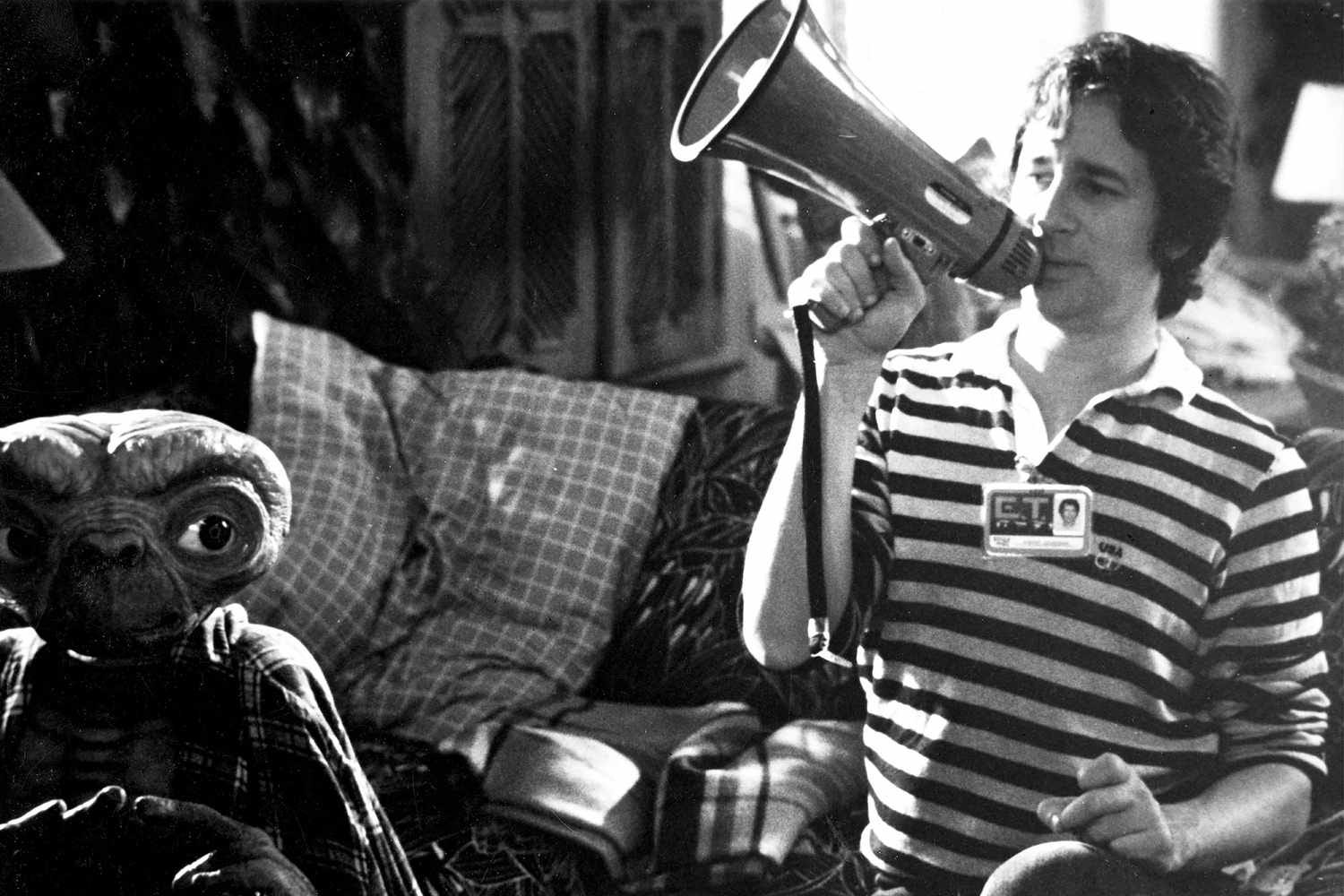
When I look up at the sky at night and I see those stars, I can’t imagine that a recon group from ten light-years away, with all of that technology and all of that experience of not destroying themselves over the eons would come here with malicious intent. I can wholeheartedly say that I feel that way because of Steven Spielberg’s ability to show me how our universe, and the humanity within it, can present a sense of wonder if we are just willing to listen.
Despite David Koepp’s heavily underwritten narrative and shallow character development – over what was reportedly 46 drafts – this is Spielberg’s story through and through. And had this film been directed by anyone else, it would’ve been an absolute train wreck. Which is a testament to his ability to illuminate the soul of a script, rather than what can easily be displayed at face value. There is a trusted earnestness beneath all of the frailties – one that makes me believe, without much convincing, that Spielberg knows exactly why he needed to tell this story.
Sadly, just like seeing Indiana Jones and the Kingdom of the Crystal Skull on opening night, Disclosure Day wasn’t necessarily the glorious sci-fi adventure I was hoping for. But this time, I understand. Because as flawed as it may be, I consider it a gift that one of our greatest living filmmakers can make an alien movie about why we should listen to each other. And having walked out of the theatre with the feeling of absolute certainty that this will not go down as one of Spielberg’s greats, it is still unequivocally Spielbergian. And that’s why I can’t stop thinking about it.